
What Size Generator Do I Need for My Home?
Power outages in Eastern Ontario are a reality — whether from ice storms, high winds, or summer heat events pushing the grid to its limits. For homeowners thinking about a standby generator, one of the first and most important questions is: what size do I actually need?
It's a question we hear regularly from homeowners across Brockville and Eastern Ontario. The answer depends on a few key factors, and getting it right matters — an undersized generator won't power what you need, and an oversized one costs more than necessary both to purchase and install.
Here's how to think about generator sizing before you call a licensed electrician for a quote.
Generator Size: What Does It Actually Mean?
Generator capacity is measured in kilowatts (kW). A higher kW rating means the generator can supply more electrical power simultaneously. Standby generators for residential use typically range from around 10 kW on the smaller end to 22 kW or more for whole-home coverage.
Step 1: Decide What You Want to Power
The first and most important decision is whether you want partial home coverage or whole-home coverage.
Partial coverage means the generator powers your essential circuits — things like your furnace, refrigerator, a few lights, and outlets for devices. This approach is common for homeowners who want reliable backup without the cost of a larger unit.
Whole-home coverage means the generator can handle your home's full electrical load, including central air conditioning, electric appliances, and everything else running simultaneously. This requires a larger unit and is typically the right choice for homeowners with higher electrical demands or those who want seamless, automatic backup without any interruption to daily life.
Step 2: Identify Your Critical Loads
Once you've decided on your coverage approach, the next step is listing the appliances and systems you need to run. Here are the approximate wattage requirements for common household loads:
Heating and Cooling
A gas or propane furnace typically requires 600 to 1,500 watts to run the blower motor and controls. Central air conditioning is one of the largest loads in a home, often requiring 3,000 to 5,000 watts or more depending on the unit size. If you want to run your air conditioning on generator power, it significantly affects the size you need.
Kitchen and Refrigeration
A standard refrigerator uses approximately 150 to 400 watts. An electric stove or range can draw 3,000 to 5,000 watts per burner — which is why many homeowners on generator power rely on a gas range instead. A microwave typically draws 1,000 to 1,500 watts.
Water and Utilities
A well pump, if your home uses one, typically requires 750 to 1,500 watts. A sump pump draws a similar amount. Hot water heaters vary significantly depending on whether they are gas or electric — electric water heaters are among the largest loads in a home and may not be practical to include in a partial backup setup.
Lighting and Electronics
LED lighting is relatively low draw, typically 10 to 20 watts per fixture. General electronics, televisions, and device charging add up but are rarely the deciding factor in generator sizing.
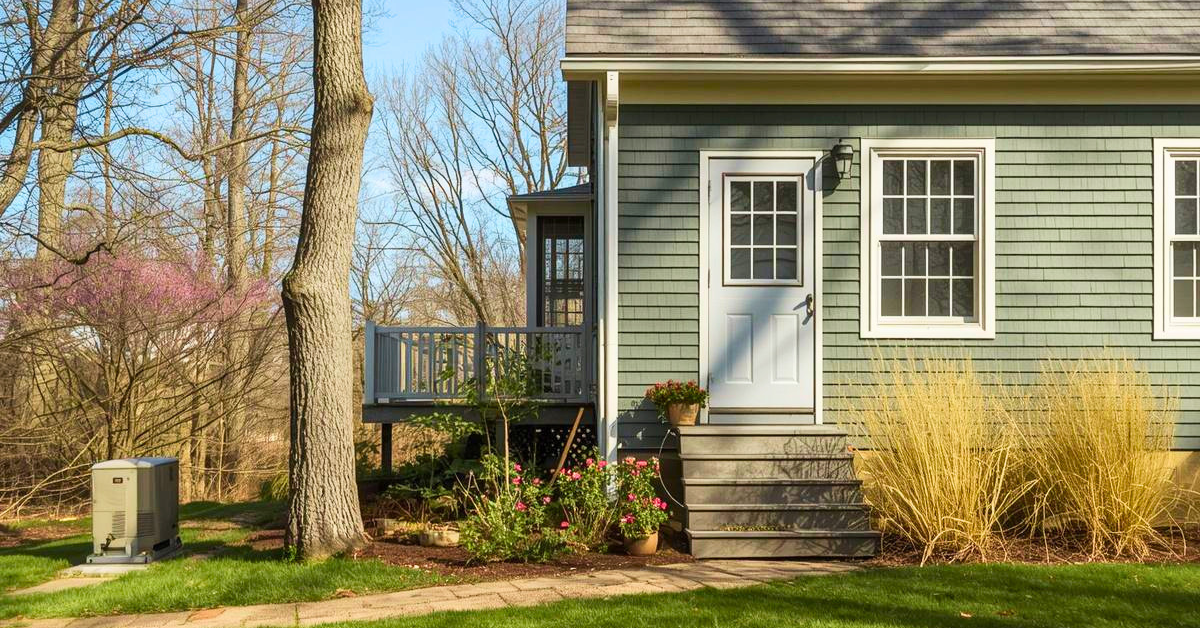
Standby generators are typically installed on a concrete pad beside the home, at least one metre from any doors, windows, or openings, and clear of any obstructions. Placement must meet Ontario's electrical and building code requirements — your licensed electrician will confirm the right location during the site assessment.
Step 3: Add Up Your Loads and Apply a Safety Margin
Once you have your list of critical loads, add up the wattages and convert to kilowatts (divide by 1,000). Your generator should be rated to handle that total comfortably — most electricians recommend choosing a unit with at least 20 to 25 percent more capacity than your calculated load to account for startup surges and any flexibility to run additional loads.
For example, a home with a furnace, refrigerator, sump pump, some lighting, and device charging might total around 5 to 7 kW of running load. With a safety margin, a 10 to 13 kW generator would be a comfortable fit.
A home that also wants to run central air conditioning or an electric water heater will typically require a 17 to 22 kW unit.
Common Residential Generator Sizes in Ontario
To give you a practical reference point, here are the most common standby generator sizes and what they typically support:
10–13 kW — Essential circuits including furnace, refrigerator, sump pump, lighting, and general outlets. A practical choice for homeowners who want reliable backup without whole-home coverage.
17–20 kW — Whole-home coverage for most average-sized Ontario homes, including central air conditioning and most appliances running simultaneously.
22 kW and above — Larger homes, homes with higher electrical demands, or properties with additional outbuildings or equipment.
Does a Generator Add Value to Your Home?
This is a question we hear more often as generator installations become increasingly common in Eastern Ontario. The short answer is yes — a permanently installed standby generator is considered a meaningful home upgrade by many buyers and appraisers, particularly in areas where power outages are frequent.
Like an electrical panel upgrade, a generator installation signals that a home has been well-maintained and is equipped for modern demands. It can be a genuine differentiator in a competitive real estate market.
Why Generator Sizing Should Be Done by a Licensed Electrician
While the guidelines above give you a starting framework, proper generator sizing for a specific home involves more than adding up wattages. A licensed electrician will assess your home's actual electrical panel capacity, calculate the transfer switch requirements, evaluate fuel source options (natural gas, propane, or diesel), and ensure the installation meets Ontario's electrical code and ESA requirements.
Getting the sizing right at the outset avoids the cost of upgrading to a larger unit later, and ensures your generator performs reliably when you actually need it.
Ready to Explore Generator Installation for Your Home?
Eldridge Electric installs standby generators for homeowners throughout Brockville, the 1000 Islands, and Eastern Ontario. Our licensed electricians handle the full installation — from sizing and transfer switch wiring to the ESA permit and final inspection.
Contact us today to discuss generator sizing and installation for your home, or to request a quote.
Eldridge Electric Inc. is a licensed and insured electrical contractor based in Brockville, Ontario. ECRA/ESA Licence #7015512.
