
What Electrical Work Requires a Licensed Electrician?
If you're planning a renovation, finishing a basement, or tackling a home improvement project, you've probably asked yourself: Do I need to hire an electrician for this, or can I handle it myself?
It's a reasonable question — and the answer in Ontario is more nuanced than a simple yes or no. Ontario's electrical regulations do allow homeowners to perform some electrical work on their own property, but with significant conditions attached. Understanding where those boundaries are — and why they exist — can save you from costly mistakes, failed inspections, and insurance complications down the road.
Who Regulates Electrical Work in Ontario?
Electrical work in Ontario is regulated by the Electrical Safety Authority (ESA), which administers the Ontario Electrical Safety Code and oversees licensing for electrical contractors and electricians.
The ESA's mandate is straightforward: ensure that electrical work in Ontario is done safely, to code, and in a way that protects homeowners, occupants, and the broader public from electrical hazards.
Any electrical work that falls under the Ontario Electrical Safety Code — which covers the vast majority of residential and commercial electrical installations — must either be performed by a licensed electrical contractor or, in limited circumstances, by a homeowner who has obtained the proper permit and meets specific conditions.
Can a Homeowner Do Their Own Electrical Work in Ontario?
Yes — but with important limitations.
Ontario allows homeowners to perform electrical work on a property they own and occupy as their primary residence. This is sometimes called the owner-occupier exemption. However several conditions apply:
You must own and live in the property — landlords cannot perform electrical work on rental properties under this exemption
You must obtain an ESA permit before starting the work
The completed work must pass an ESA inspection
The work must comply fully with the Ontario Electrical Safety Code
In practice, this means a homeowner with electrical knowledge can legally wire a new outlet or add a circuit in their own home — provided they pull a permit and pass inspection. What it does not mean is that electrical work can be done without oversight or accountability.
What Electrical Work Always Requires a Licensed Electrician?
Regardless of the owner-occupier exemption, certain types of electrical work in Ontario must be performed by a licensed electrical contractor. These include:
Any Work on a Property You Don't Own and Occupy
Rental properties, cottages, investment properties, and any property where you are not the owner-occupant fall outside the exemption entirely. All electrical work on these properties must be completed by a licensed electrical contractor.
Electrical Service Entrance Work
Any work involving the service entrance — the point where electricity enters your home from the utility — must be performed by a licensed electrician. This includes meter base work, service upgrades, and connections to the utility's infrastructure. Hydro One coordination for service upgrades also requires a licensed contractor.
Work in Commercial or Multi-Residential Buildings
The owner-occupier exemption applies to single-family residential properties only. Commercial buildings, multi-unit residential buildings, and mixed-use properties require licensed electrical contractors for all electrical work.
New Construction
Electrical rough-in and systems installation for new home construction or major additions typically requires a licensed electrical contractor, particularly where inspections are required at multiple stages of the build.
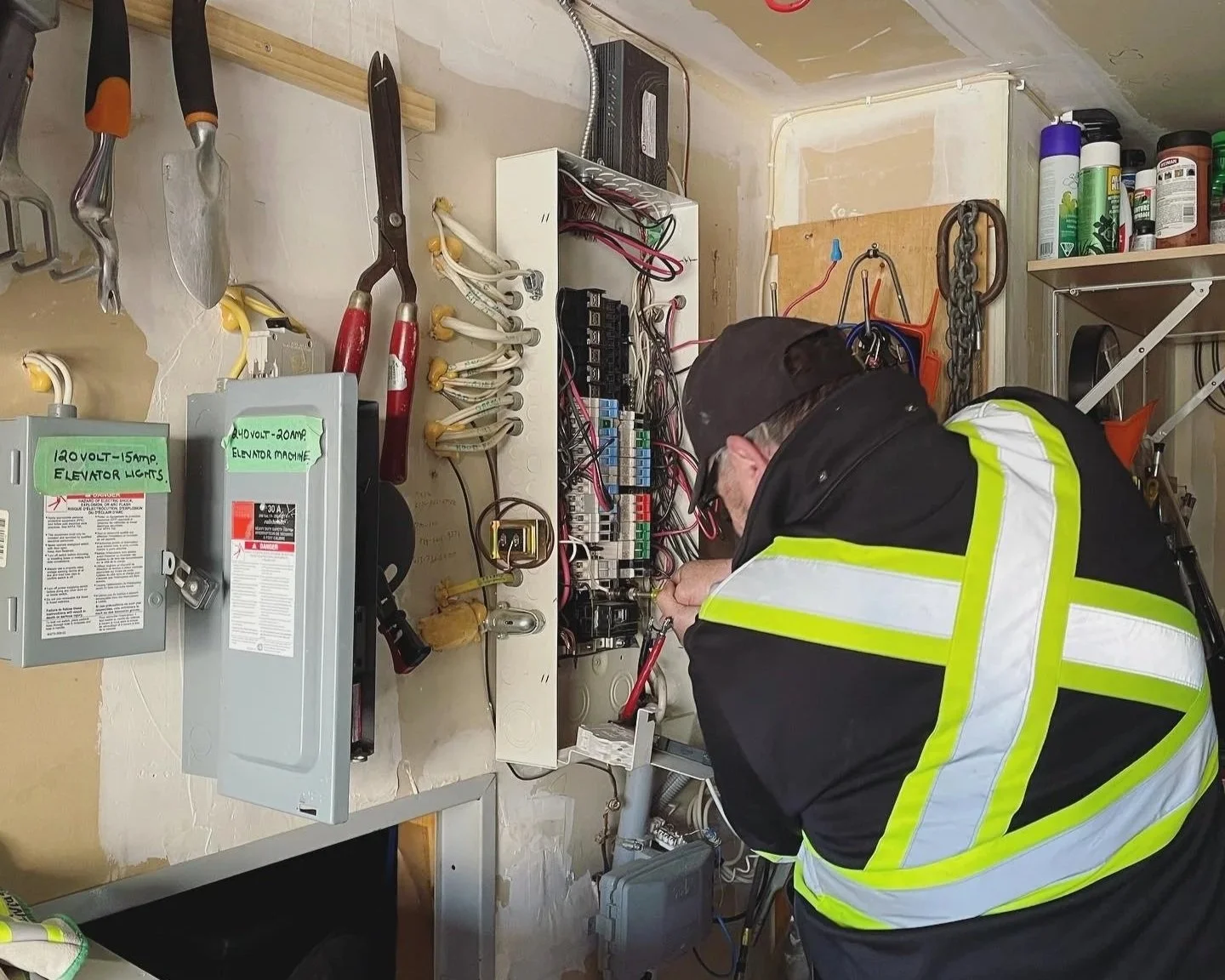
All electrical panel work completed by Eldridge Electric is performed by licensed electricians under ECRA/ESA Licence #7015512 — ensuring every installation meets Ontario's electrical code standards.
Whatever it is, the way you tell your story online can make all the difference.
What Electrical Work Should Always Be Left to a Licensed Electrician — Even If Technically Permitted?
Just because a homeowner is legally permitted to attempt certain electrical work doesn't mean it's always advisable. There are situations where the complexity, safety risk, or consequence of error strongly favours hiring a licensed electrician regardless of the legal permission:
Electrical panel work — working inside a live electrical panel carries serious risk of electrocution. Even experienced DIYers can make errors in panel work that create fire hazards or fail inspection.
Aluminum wiring remediation — pigtailing or modifying aluminum wiring requires specific connectors and techniques. Improper connections are a leading cause of electrical fires in older homes.
Knob and tube wiring — modifying or extending knob and tube wiring requires a thorough understanding of its limitations and the applicable code requirements.
Generator and transfer switch installation — improper transfer switch installation can backfeed power onto utility lines, creating a lethal hazard for utility workers and neighbours.
EV charger installation — a dedicated high-amperage circuit requires proper load calculation, correct wire sizing, and ESA compliance. Errors here can damage vehicles and create fire risk.
Any work inside walls or ceilings — once drywall goes up, errors become expensive to find and fix. Getting it right the first time matters.
Why Does It Matter? The Real Consequences of Unlicensed Electrical Work
Beyond the safety risks, unlicensed or unpermitted electrical work creates practical problems that homeowners often don't anticipate:
Insurance — most home insurance policies require that electrical work be performed by licensed contractors or properly permitted and inspected if done by the homeowner. Unpermitted work can void your coverage for claims related to electrical fires or damage.
Resale — unpermitted electrical work is a material defect that must be disclosed to buyers in Ontario. It can complicate or derail a sale and may require remediation at your expense before closing.
Inspection failures — work that doesn't pass ESA inspection must be corrected and re-inspected. The cost of re-inspection and rework often exceeds what licensed installation would have cost in the first place.
Liability — if unpermitted electrical work contributes to a fire, injury, or damage, the homeowner may bear significant personal liability.
How Do You Know If an Electrician Is Licensed in Ontario?
Before hiring any electrician in Ontario, you can verify their licence through the ESA's online contractor lookup at esasafe.com. A valid ECRA/ESA licence number confirms the contractor is authorized to perform electrical work in Ontario.
When in Doubt, Ask
If you're unsure whether your planned project requires a licensed electrician, the safest approach is simply to ask. Eldridge Electric serves homeowners throughout Brockville, the 1000 Islands, and Eastern Ontario — and we're happy to answer questions about scope, permits, and what your project actually involves before any work is committed.
Contact us to discuss your project or request a free quote.
Eldridge Electric Inc. is a licensed and insured electrical contractor based in Brockville, Ontario. ECRA/ESA Licence #7015512.
